- Call the factory at
- 057 573 1685


Grafstene in Bloemfontein
August 20, 2026Marble vs granite gravestones
August 24, 2026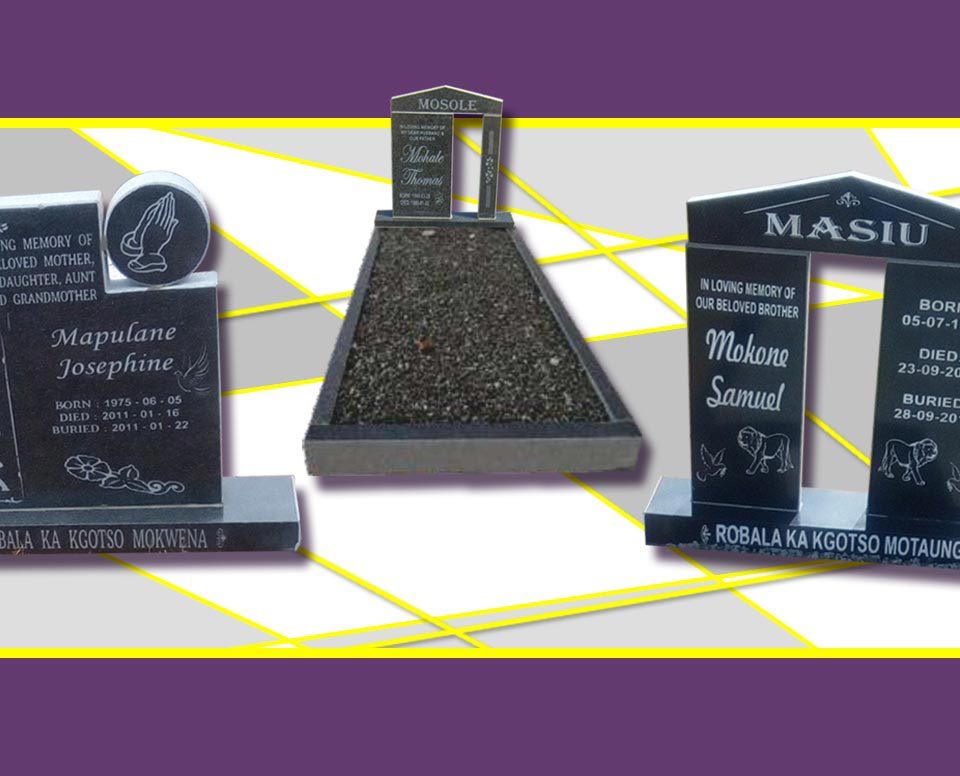
Royal Range

Budget Range

Standard Range

Executive Range

Double Range

Child Range

Granite is widely used for headstones because it combines strength, weather resistance and a broad choice of colours and finishes. It can be cut into traditional upright memorials, full monuments, double headstones and more detailed shapes while still providing a stable surface for inscriptions.
The main types of granite for headstones are usually identified by colour and commercial stone name rather than by a universal grading system. Black, grey, white, red, brown, blue and green varieties are available, each with different patterns, engraving contrast and maintenance considerations. Availability may change because granite is a natural material sourced from particular quarries.
Choosing a granite colour is only part of the decision. Grain consistency, surface finish, inscription method, monument design, cemetery rules and the quality of installation all affect the completed memorial. A beautiful stone that does not suit the lettering or permitted cemetery dimensions may not produce the intended result.
This guide explains the most common granite colours used for headstones, how finishes change their appearance, and what South African families should check before approving a memorial.
What are the main types of granite for headstones?
Headstone suppliers generally classify granite by its visible colour, pattern and trade name. The exact mineral composition may differ between stones. Some materials marketed within the memorial industry as granite are geologically related igneous rocks, such as gabbro, but are grouped with granite because they have similar working and performance characteristics.
Commercial names are not always standardised between suppliers. Two stones with similar names may come from different quarries or show noticeably different grain patterns. Families should therefore view a current sample and, where possible, confirm the appearance of the slab that will be used.
Black granite
Black granite is one of the most recognisable choices for modern headstones. Its dark, polished surface creates strong contrast with white, silver or gold-coloured lettering. It is also particularly suitable for fine artwork and photographic-style laser etching, provided the selected stone has the right fine-grained, consistent surface.
Not all black granite is completely uniform. Some slabs contain silver flecks, pale grains or subtle clouding. A highly polished black surface may show dust, fingerprints, dried water marks and mineral deposits more readily than a patterned stone, so it may need more frequent light cleaning to retain its reflective appearance.
Black granite suits simple plaques, upright headstones, full monuments and contemporary designs. It is often selected where inscription clarity is a priority.
Grey granite
Grey granite ranges from pale silver-grey to dark charcoal and may contain black, white or blue-toned mineral grains. Its natural pattern tends to disguise dust and minor surface marks better than a plain dark surface.
Lettering contrast requires careful planning. Deep sandblasted letters may be painted or finished in a contrasting colour so that names and dates remain easy to read. On a heavily patterned grey slab, small or very ornate text can lose visual clarity. A supplier should assess the typeface, letter depth and finish against the actual stone.
Grey is a versatile option for traditional and modern memorials. It also coordinates well with exposed rock-textured edges, polished panels and contrasting granite inserts.
White and very light granite
Light granite can contain white, cream, silver and grey minerals, often with visible speckling or movement across the slab. It creates a softer appearance and can work well in memorials that use darker lettering or contrasting granite panels.
Pure white, completely pattern-free natural granite is uncommon. Families expecting a uniform white surface should inspect the material closely because natural flecks and veins are part of the stone rather than defects. Pale stone can also make uncoloured shallow engraving difficult to read, so inscription contrast must be included in the design.
Red and multicoloured granite
Red granite varies from warm pink and rust shades to deep burgundy. Black, grey and pale mineral grains may form sweeping or mottled patterns. This natural movement gives each memorial an individual character, although it can affect where inscriptions and decorative elements should be positioned.
Red granite is often paired with light-coloured lettering or black panels. It can be used across a complete monument or as an accent alongside black granite. Because strongly patterned slabs differ, selection should be based on a physical sample rather than a screen image alone.
Brown granite
Brown granite includes tan, bronze, coffee and deep chocolate tones. Some varieties have a relatively even grain, while others contain flowing black or gold-coloured patterns. These warmer colours can suit both understated memorials and more elaborate full monuments.
As with red granite, the inscription needs enough contrast against the background. Brown stone with active patterning may benefit from a dedicated polished inscription panel or a simpler lettering layout.
Blue and green granite
Blue and green commercial granites are often dark stones with coloured mineral flashes rather than solid blue or green surfaces. Their appearance may change under direct sunlight and from different viewing angles. These stones can create a distinctive memorial, particularly when combined with restrained lettering and a simple shape.
Specialised colours may be less consistently available than common black or grey options. If a future matching memorial, additional plaque or double headstone is anticipated, discuss continuity before placing the order. No natural slab can be guaranteed to have an identical pattern, even when it comes from the same named stone.
Granite colour comparison for memorials
No single colour is automatically the best granite for a headstone. The right option depends on the desired appearance, inscription technique, design and practical maintenance expectations.
- Black granite: Strong lettering contrast and well suited to detailed etching, but polished surfaces show dust and water marks easily.
- Grey granite: Versatile, traditional and effective at disguising everyday dust, although lettering may need added contrast.
- White or pale granite: Soft and distinctive, with natural speckling that should be expected. Darker lettering is usually clearer.
- Red or brown granite: Warm colours with noticeable natural variation. Layouts should account for active patterns.
- Blue or green granite: Distinctive mineral colour and depth, but availability and slab-to-slab consistency may be more limited.
Photographs are useful for narrowing down preferences, but they cannot show stone accurately in every case. Screen settings, studio lighting and wet surfaces may change how a colour appears. Viewing a sample in natural light gives a more reliable indication.
How granite finishes change the appearance
The same granite can look like a different material after its surface is finished. Finish selection influences colour depth, reflection, texture, inscription visibility and cleaning.
Polished finish
Polishing produces a smooth, reflective surface and brings out the deepest colour in the stone. It is commonly used on the front face where the inscription appears. Dark polished granite generally provides a crisp surface for lettering and decorative work.
A polished face is easy to wipe gently, but it also reveals dried droplets and fingerprints. Reflection can affect readability from certain angles, which should be considered when choosing a typeface and inscription colour.
Honed finish
A honed surface is smooth but has a matt or low-sheen appearance. It creates less glare than polished granite and gives the stone a quieter, more understated character. Colours tend to appear lighter and less saturated after honing.
Honed granite can show oily marks differently from polished stone, so cleaning products should be selected carefully. Lettering must still contrast sufficiently with the muted background.
Rock-pitched or rustic finish
A rock-pitched finish leaves selected edges or surfaces rough and irregular. It gives the memorial a natural, substantial appearance and is often used around a polished inscription face. The textured area collects more dust and organic debris than a smooth face and cannot be cleaned simply by wiping.
Rustic finishing also makes the final outline less mechanically uniform. That variation is intentional and should be shown clearly in the design approval.
Sandblasted texture and lettering
Sandblasting is used both to create matt decorative areas and to cut inscriptions into granite. The result depends on the stencil, depth, stone grain and finishing method. Letters may be left natural or enhanced with a suitable colour or metallic-effect finish.
Very thin lettering, tiny text and intricate motifs are not equally successful on every granite. The designer should adapt the artwork to the stone and the expected viewing distance rather than forcing excessive detail into a small area.
Granite engraving and inscription options
A memorial is meant to preserve names, dates and a personal message clearly. The granite should therefore be chosen with the inscription, not before it.
Common inscription approaches include sandblasted lettering, carved detail, laser-etched imagery and attached elements such as ceramic photographs. Laser etching is generally most visible on polished, dark, fine-grained stone because the process creates a pale image against the dark face. Sandblasting is more adaptable across different colours when letter depth and contrast are planned correctly.
Ask to approve the complete inscription layout before production. Check every name, date, spelling, title, language accent, Bible reference and punctuation mark. A proof should also show the approximate position of photographs, flowers, religious symbols and borders.
Lettering longevity is not determined by granite alone. Applied colour, gilding, adhesives and photographic components have their own exposure and care requirements. Ask what maintenance may be needed for these elements over time.
Factors that determine granite quality and suitability
Descriptions such as first grade, premium or export quality are not universally comparable unless a supplier explains the criteria behind them. Families can make a more useful assessment by considering visible and practical characteristics.
- Grain consistency: Fine, even stone may support detailed inscriptions better, while bold movement can become part of the design.
- Cracks and repairs: Structural cracks are different from natural veins or colour changes. Any visible filled areas should be discussed before approval.
- Slab dimensions: The stone must have suitable thickness and proportions for the memorial design, support system and cemetery requirements.
- Surface workmanship: Polished faces should be even, while edges, joins, drilled areas and decorative details should be finished appropriately.
- Design compatibility: Large projections, narrow sections and complicated shapes need sound structural planning regardless of stone colour.
- Installation: A high-quality slab still requires an appropriate base, secure assembly and installation that complies with cemetery rules.
The country or quarry of origin does not by itself prove that one granite is better than another. Different sources produce materials with different visual and working properties. Judge the actual stone, its suitability for the design and the completed construction method.
Choosing a granite headstone for Free State conditions
Free State memorials may be exposed to strong sun, summer storms, dust, frost in some areas and substantial temperature changes. Dense granite is well suited to outdoor use, but drainage, foundations, joints and installation remain essential. Water should not be trapped around the base, and the structure should not rely on decorative adhesive alone for stability.
Cemetery regulations differ. They may control monument dimensions, base construction, permitted materials, installation times and access for contractors. Some cemetery sections allow full monuments, while others may limit memorials to a particular format. Confirm the applicable requirements with the cemetery or relevant municipality before finalising the design.
Families arranging a burial in the Free State should also establish whether installation, lettering, transport and cemetery-related work are included in a quotation. Tombco’s contact page can be used to enquire about current service coverage and assistance for a specific town or cemetery.
Matching the granite to the memorial design
Granite selection becomes easier after the family has agreed on the approximate monument format and budget. A simple upright stone uses colour differently from a full monument with a base, kerbs, pillars and contrasting inserts.
For a restrained design, explore Tombco’s budget headstone range and standard memorial range. These categories can help families compare shapes before deciding how much pattern or colour the stone should carry.
Larger and more detailed designs may be viewed in the executive headstone range and royal memorial range. Elaborate monuments often combine polished and textured surfaces or use contrasting granite colours to separate the inscription from decorative components.
Families planning a shared memorial can review double headstone designs. A double memorial needs enough inscription space for both people and a balanced layout that can accommodate existing or future details. For a young person, Tombco’s child memorial range provides design references created for a more sensitive scale.
Product photographs should be treated as design guidance. Natural stone patterns vary, and practical details may need to change for cemetery rules, inscriptions or available material.
How to compare quotations properly
A low total does not reveal what has been included. Ask each supplier to describe the same scope so that the comparison is meaningful. The quotation should identify the monument design, granite colour or trade name, dimensions, inscription allowance, artwork, photographs, finish, transport and installation where applicable.
Clarify these points before accepting:
- Is the displayed stone a current sample of the granite that will be supplied?
- Which parts will be polished, honed, sandblasted or rock-textured?
- How many letters and decorative elements are included?
- Are the foundation, assembly and cemetery installation included?
- Are permit or cemetery charges separate?
- What happens if the cemetery rejects the proposed dimensions?
- Who must approve the final inscription proof and design?
- What care is recommended for the stone and applied finishes?
A written specification reduces misunderstandings. Do not approve production until the family has checked both the visual design and the wording.
Cleaning and caring for granite headstones
Granite normally needs modest maintenance. Begin with clean water and a soft cloth or soft-bristled brush. Work gently from the bottom upwards on upright faces to reduce streaking, then rinse thoroughly. A pH-neutral cleaner intended for natural stone may be used if water alone is insufficient and the product instructions permit it.
Avoid wire brushes, abrasive pads and tools that can scratch polished surfaces. Strong acids, harsh household chemicals and untested stain removers may affect the stone, lettering colour, gilding, joints or attached photographs. High-pressure cleaning can force water into joins and damage painted or delicate details, so it should not be used casually.
Do not attempt to straighten, dismantle or reattach a loose headstone yourself. Memorial components are heavy and can cause serious injury. Report movement, cracked joins or instability to the cemetery and a monument installer.
Common mistakes to avoid
- Selecting from a heavily edited photograph without viewing a representative stone sample.
- Choosing a colour before deciding how the inscription will be made visible.
- Assuming all stones with the same commercial name will have identical patterns.
- Approving small, ornate lettering that is unsuitable for the granite grain or viewing distance.
- Finalising a monument without checking cemetery dimensions and foundation rules.
- Comparing prices without confirming installation, inscriptions, transport and other exclusions.
- Using aggressive cleaning products on the granite or its decorative finishes.
- Failing to proofread names and dates before engraving begins.
Questions people ask about headstone granite
Which granite colour is best for a headstone?
There is no single best colour. Black granite gives strong engraving contrast, grey disguises dust well, and red, brown, blue or green stones offer more visible natural character. The best choice is one that suits the inscription method, design, cemetery requirements and family’s preferences.
Is black granite more durable than grey granite?
Colour alone does not determine durability. Density, natural integrity, slab preparation, monument design and installation are more useful considerations. Both black and grey memorial stones can be suitable for outdoor use when correctly selected and installed.
Can a photograph be engraved into any granite?
Detailed laser-etched portraits are generally clearest on dark, polished, fine-grained stone. Other granite colours may suit sandblasted artwork, contrasting panels or attached ceramic photographs better. The image quality and available engraving area also affect the result.
Will two headstones made from the same granite match exactly?
Not necessarily. Granite is natural, so grain, veining and colour distribution vary between slabs and quarry batches. Closely matched pieces may be selected for one monument, but an exact match years later may not be possible.
Does polished granite require sealing?
Sealing requirements depend on the particular stone, surface, installation and exposure. Do not apply a general-purpose sealer without professional guidance, as it may alter the appearance or trap moisture. Ask the memorial supplier for care instructions specific to the selected granite.
How long does a granite headstone last?
Granite is chosen for long-term exterior memorial use, but no responsible lifespan can be stated from colour alone. Stone quality, structural design, foundations, installation, ground movement, maintenance and treatment of joints or applied finishes all influence performance.
Discuss granite options with Tombco
The most useful way to choose between the types of granite for headstones is to compare current samples alongside the intended design and inscription. Consider the stone in natural light, check how the lettering will contrast, and confirm cemetery requirements before approving production.
Browse Tombco’s memorial ranges for design ideas, then contact Tombco about a granite headstone for your family. Include the cemetery or Free State town, preferred monument style, inscription requirements and any colours you are considering so that the enquiry can be assessed accurately.
Areas We Cover
Hennenman | Bethelehem | Bothaville | Kroonstad | Virginia | Senekal | Wesselsbron | Welkom | Bloemfontein | Thaba ‘Ncu | Botshabelo | Theunissen